A metronome is for locking in time you can already play. It is not a tool for learning a piece, and it will not teach you rhythm you have never worked out. Set it 20 to 30 percent below the fastest tempo you can play a passage cleanly, keep it there until three passes in a row come out even, then nudge it up by about four beats per minute. That is most of the method.
The rest of this is about the part nobody warns you about.
Why does the piece fall apart the second the click starts?
This is the single most common complaint about metronomes, and it is worth being blunt: the click did not make you worse. It made something audible that was already there.
Playing without a reference, you borrow time. You take a fraction longer over the bar with the awkward fingering and give it back over the easy one. It feels continuous from the inside because your hands and your sense of pulse are drifting together. A click does not drift, so the two disagree, and the disagreement is what you hear as falling apart.
That is a diagnosis, not a verdict. The bars where you and the click part company are exactly the bars to practise, and you now know which ones they are.
Worth knowing: the skill you are building here is physical rather than arithmetic. Piano teachers call it entrainment, the business of syncing your body to an external pulse. You are not trying to calculate that a half note lasts as long as two quarters. You are trying to feel it. That distinction changes how you should set the thing up.
Set it up in about ten seconds
On the free web metronome, the fastest route to a usable tempo is tap tempo: tap the pulse you want four or five times and it reads the speed off your taps. Otherwise drag the slider, which runs from 40 to 240 BPM.
Then set the time signature, because the first beat of each bar gets an accent and the beat dots show you where you are in the bar. Without that, a click is just an undifferentiated ticking and you lose your place in anything that is not four square beats.
Click the subdivision, not the beat
Here is the setting that fixes most rhythm problems, and almost nobody uses it.
If the trouble is dotted rhythms, ties, or eighth notes that keep coming out lopsided, do not click quarters faster. Click the subdivision. Pick an x/8 time signature and the metronome clicks eighth notes at the same underlying quarter-note tempo, so 6/8 gives you six clicks a bar. An x/16 signature clicks sixteenths.
Now the short notes have something to land on instead of something to be counted against. Play the passage that way for a few minutes, then switch back to quarters and see whether it holds. Usually it does, because you learned where the notes sit rather than what they add up to.
When to leave it off
Three situations where a metronome makes practice worse.
A first read-through. You are decoding which note is which. Adding a deadline to that does not build time, it builds panic. Get the notes under your fingers first, hands separately if you need to, then bring the click in.
Music that is meant to breathe. A nocturne, a slow film theme, most of the piano repertoire people actually want to learn for its own sake. Bending the tempo is the expressive content of that music. You may still use a click on one tricky inner passage, but do not put the whole piece on a grid.
Your target tempo, too early. Playing something at full speed before the notes are secure rehearses the mistakes faster. If you want the piece at 120, get it clean at 84.
Steady quarter-note pieces are where a click pays off soonest. Ode to Joy in Piano Aura's Piano Game is about as friendly as it gets for that. Something like Fur Elise, where the opening usually takes a little time, is not the piece to prove a point with.
FAQ
What BPM should a beginner start at?
Whatever tempo lets you play the passage without a single stumble, then a bit slower. For most beginners on a simple melody that lands somewhere between 60 and 80. The number is not a score.
Should I use a metronome for scales?
Yes, and this is the best use of one. Scales have no expressive timing to protect, so a click gives you honest feedback on whether the thumb crossing rushes.
Does Piano Aura have a metronome?
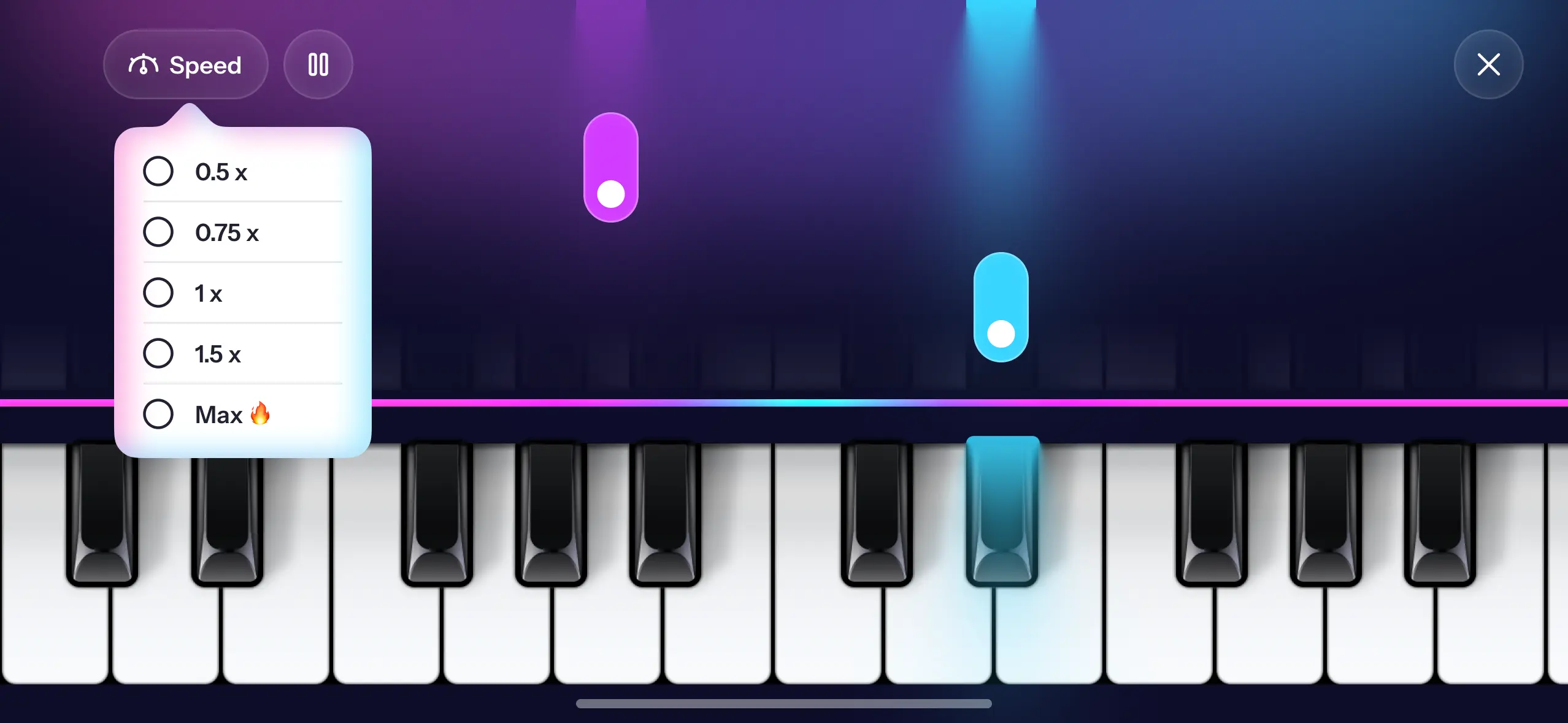
There is one in Create Music, as part of the premium recording features, for keeping a multi-track piece in time. The web metronome on this site is free and needs no account. If you want to slow a song down rather than click along to it, Piano Game has speed settings from half speed up to maximum.
Why can I play it without the click but not with it?
Because you were changing tempo without knowing. See the first section. It is normal, it is fixable, and it is the reason to keep using the thing.
A metronome is a measuring device. It tells you the truth about your timing and nothing else, which is exactly why it feels unkind at first and useful later. If you want the rest of the practice picture, how long it actually takes to learn piano and practising without a piano cover the parts a click cannot.
Piano Aura is free on the App Store if you want somewhere to put the practice.