Two notes tell you almost everything about a chord: the bottom one and the middle one. A major chord is a root note, the note four half steps above it, and the note three half steps above that. Slide that middle note down by a single half step and you have a minor chord. Same hand shape, one key moved, and the mood flips from bright to sad. That is the whole idea, and once you see it you can build both anywhere on the keyboard.
What is a piano chord?
A chord is just three or more notes played together. The most common ones in the music you already know are triads, meaning three notes stacked in thirds. The bottom note is the root, and it names the chord. The other two notes decide whether it sounds happy, sad, or somewhere stranger. You do not need to read music to play them. You need to know the shape and where to put your thumb.
How to play a major chord
Start with C major, because it uses only white keys and it is easy to see. Put your thumb on middle C. Skip the next white key (D) and put your middle finger on E. Skip another white key (F) and put your little finger, or your ring finger, on G. Press all three together. That bright, settled sound is a major chord.
Count the gaps and you will notice the pattern: four half steps from C to E, then three half steps from E to G. A half step is the very next key, black or white. Move that same four-then-three shape to any starting note and you get that note's major chord. G major, F major, D major, all the same shape shifted along the keys.
How to play a minor chord
Here is the part that feels like a magic trick. Take your C major shape and move the middle note, E, down one half step to the black key just below it (E flat). Now you are playing C, E flat, and G. That is C minor, and it sounds wistful where C major sounded cheerful. The gaps flipped: three half steps first, then four. Every minor chord is a major chord with that middle note lowered by one key. One finger, whole new feeling.
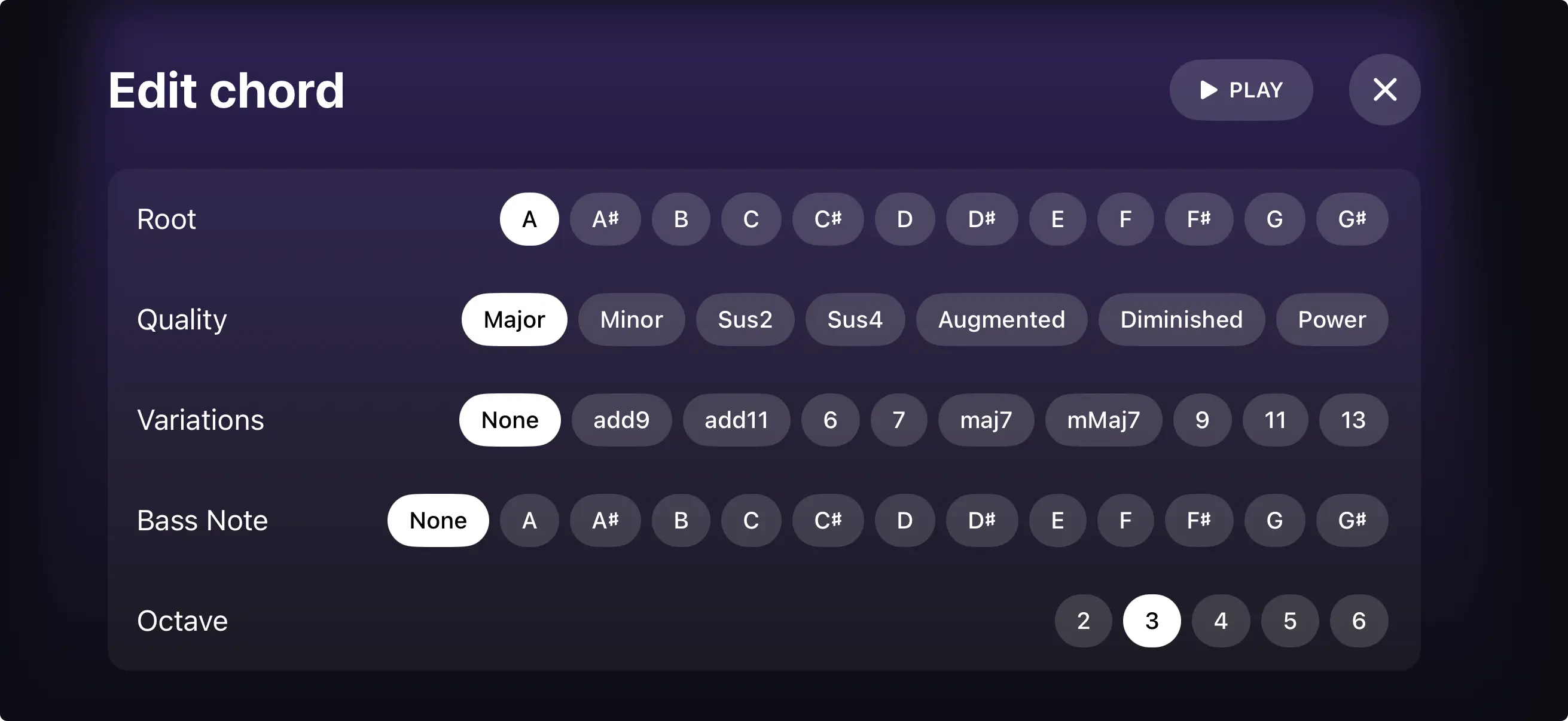
The five chords that cover the most songs
You do not need all twelve keys' worth of chords to start. Five will carry you a long way: C major, G major, F major, A minor, and D minor. That handful shows up, in some order, under a huge number of pop, folk, and worship songs. Pachelbel's Canon, which half the internet has played, is built from moving between chords exactly like these, and it is one of the songs you can play in Piano Aura's Piano Game. Learn the five shapes until your hand finds them without looking, and you can accompany yourself while you sing or pick out a melody on top.