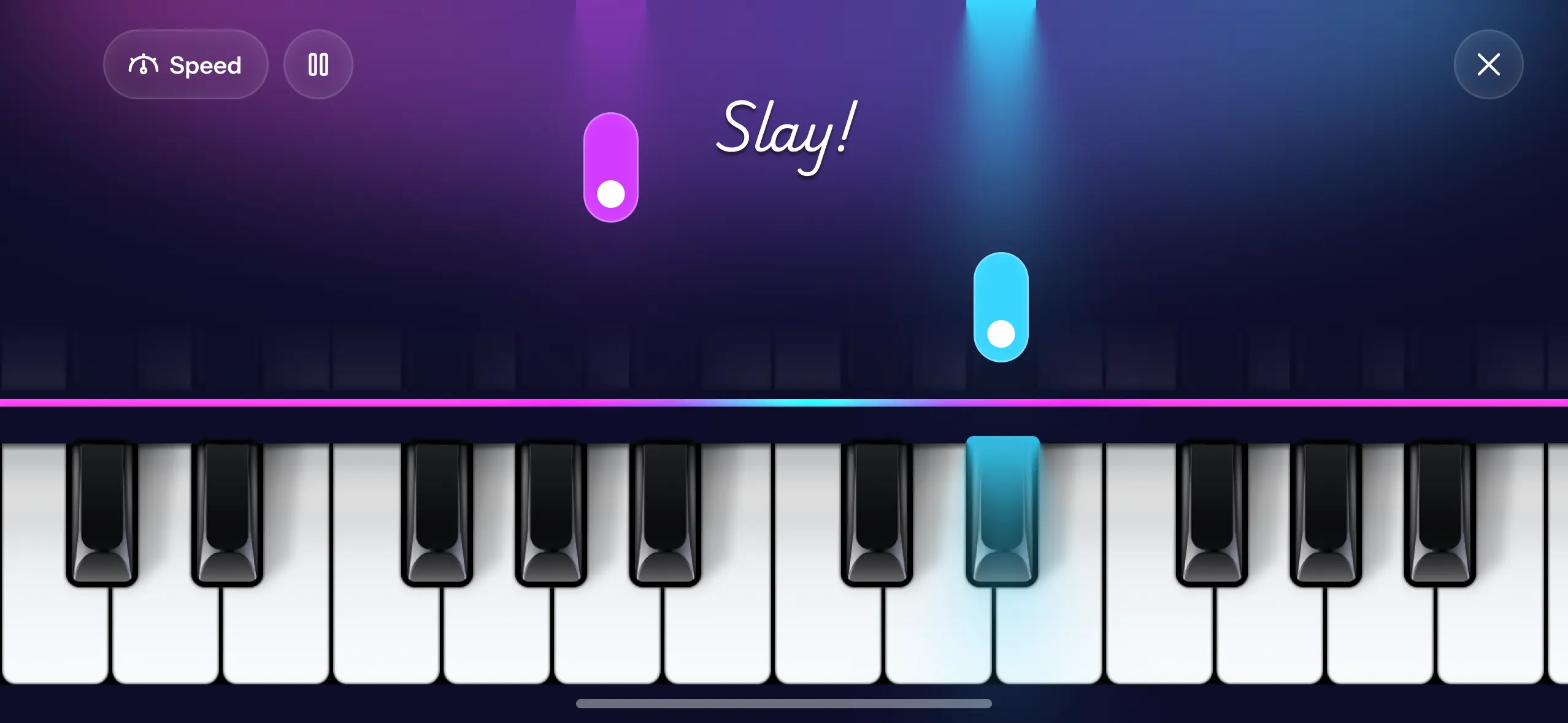
Ja, du kan lære at spille klaver uden at læse noder. At læse nodeskrift og at spille instrumentet er to adskilte færdigheder, og du kan få mange års rigtigt spil ud af den anden uden nogensinde at røre den første. To metoder virker: at spille efter gehør og at følge faldende noder, som du trykker på, når de lander. Faldende noder er den hurtigste start, og de lader dig spille et genkendeligt stykke af et værk som Für Elise eller Clair de Lune allerede første gang, du sætter dig ned.
De fleste, der droppede klaver, droppede det ikke på grund af deres hænder. De droppede det på grund af prikkerne. Noder ligner et andet sprog, du skal lære, før du får lov til at lave en eneste lyd, og den mur stopper en masse mennesker, der ville have elsket at spille.
Her er den del, ingen nævner i begyndelsen: du har faktisk ikke brug for det. Der er to veje ind, og de passer til forskellige slags mennesker.
At spille efter gehør
Det er den gamle måde, og den virker stadig. Du hører en melodi, du nynner den, og du jagter den på tangenterne, indtil den passer. De første par sange er langsomme og lidt frustrerende. Så falder noget på plads, og du begynder at fornemme, hvor noderne bor, i stedet for at gætte.
Hvis du vil prøve det i aften, så vælg en melodi, du kan udenad, noget i stil med "Happy Birthday." Syng den første linje, find startnoden, og bevæg dig op eller ned én tangent ad gangen, indtil hver node matcher det, du synger. Du træner dit øre og dine fingre på samme tid, hvilket er hele færdigheden i miniature.
Hagen er, at det at spille efter gehør kræver tålmodighed, og tålmodighed er præcis det, en begynder mangler. Hvis det er den vej, der tiltaler dig, gennemgår hvordan du lærer klaver efter gehør den skridt for skridt. Ellers er det der, den anden metode kommer ind.
At følge noderne, mens de falder
Du har sikkert set det, selvom du aldrig har spillet. Noder glider ned ad skærmen mod en linje, og du trykker på den matchende tangent, efterhånden som hver enkelt ankommer. Ingen noder, ingen teori, bare timing og mønster. Det føles som et spil, hvilket er pointen, for din hjerne lærer en sangs form langt hurtigere, når den ikke samtidig kæmper med symboler.
Sådan fungerer klaverspillet i Piano Aura. Du vælger en sang, noderne falder mod linjen, og du spiller dem, efterhånden som de lander. Du kan starte en sang på Let og sætte den helt ned i tempo, mens du lærer bevægelsen, og så skrue den op til Medium eller Svær, når dine hænder kender vejen. Der er en score og en streak-tæller, hvis du er typen, der presser på, og du kan ignorere dem begge, hvis du ikke er.
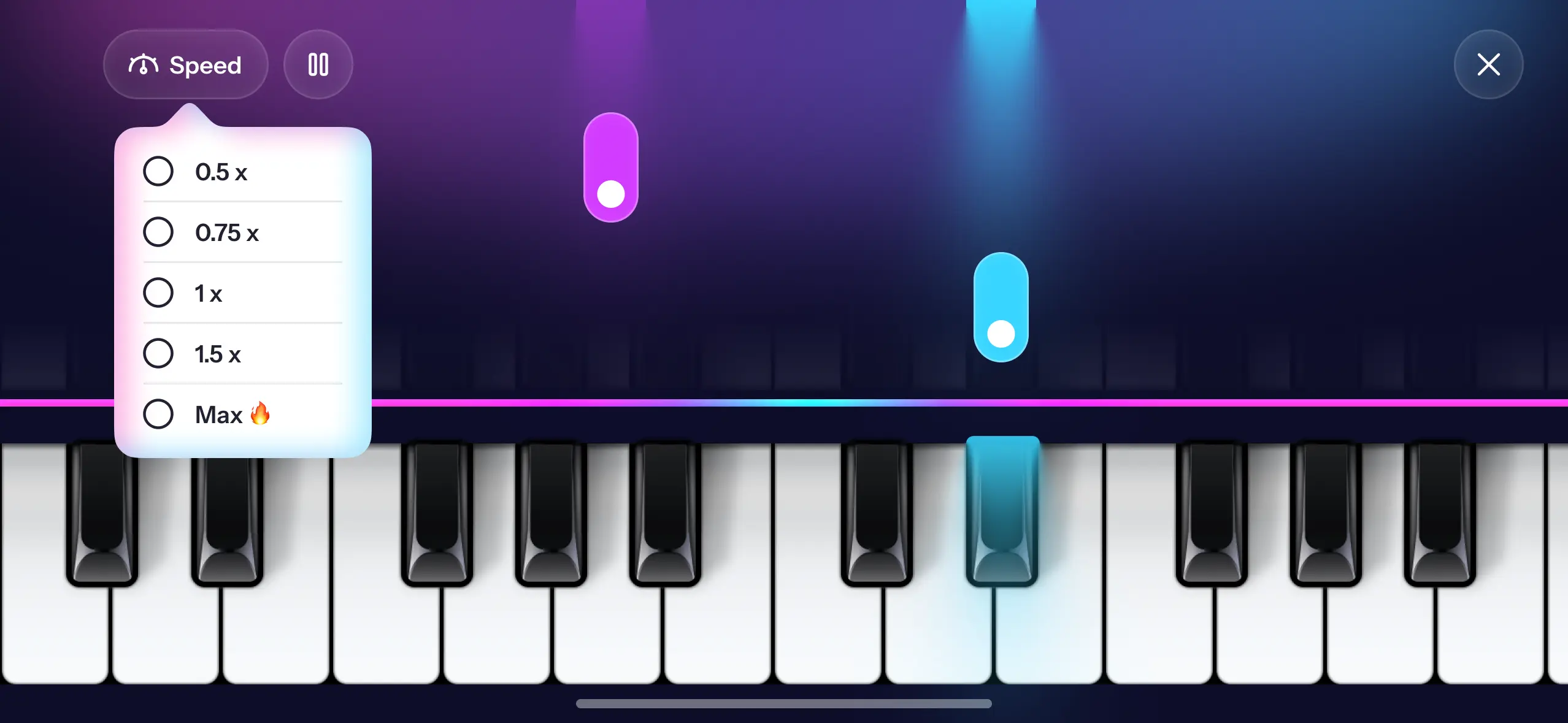
En lille ting, der hjælper mere, end den burde: sæt sangen ned i tempo, før du sætter den op. Folk prøver at spille ved fuldt tempo på dag ét, misser halvdelen af noderne og beslutter, at de er håbløse. Sæt den ned til halvt tempo, få den ren, og lad den så blive hurtigere af sig selv.
Hvad du faktisk ikke kan læse endnu
"Jeg kan ikke læse noder" viser sig næsten altid at betyde noget mere snævert, end det lyder. De fleste, der siger det, kan godt regne ud, at en node på den nederste linje i g-nøglen er et e, hvis de får et øjeblik. Det, der stopper dem, er den anden halvdel af siden: hvor længe hver node varer, og hvordan to rytmer passer mod hinanden i samme hånd.
Den forskel er værd at kende, før du vælger metode, for de to ovenfor håndterer den vidt forskelligt. At spille efter gehør giver dig varigheden gratis. Du ved allerede, hvordan melodien går, så dit øre lader dig ikke holde en node dobbelt så længe, som den skal være. Faldende noder virker omvendt. En faldende node fortæller dig præcis, hvornår du skal ramme en tangent, og næsten intet om, hvor længe du skal holde den nede, så du kan spille en sang færdig i klaverspillet og stadig ikke vide, at dens sidste akkord blev holdt i fire slag.
Ingen af de to er en fejl, og ingen af dem er den version af "kan ikke læse noder", folk går og er bekymrede for. Men det betyder, at hvis noder står et sted på din liste, er den del, der er værd at studere, nodeværdier, pauser og punkterede noder, ikke nodenavnene. Navnene er en eftermiddag. Rytmen er den egentlige færdighed, og det er den, der stadig snyder folk år senere.
Hvornår du skal sætte tempoet op igen
At sætte en sang ned i tempo er den nemme halvdel af det råd. At vide, hvornår du har fortjent det næste tempo, er den halvdel, ingen fortæller dig om, og det er derfor, folk sidder fast på 0.75x i ugevis eller springer direkte til fuldt tempo og falder fra hinanden.
Tre betingelser, og sæt kun tempoet op, når alle tre holder. Du kan spille sangen fra start til slut uden at stoppe og tænke over, hvad der kommer nu. Du laver ikke længere den samme fejl i den samme takt. Og det nuværende tempo er begyndt at føles langsomt. Den sidste gør det meste af arbejdet, og det er den, folk overser: keder du dig ved et bestemt tempo, har dine hænder ikke længere brug for den ekstra tid, og at blive der er bare at øve sig i at være langsom.
Flyt så ét trin, ikke to. Klaverspillets tempotrin går 0.5x, 0.75x, 1x, 1.5x og Max, og springet mellem naboerne er lille nok til, at en ren gennemspilning ved det ene som regel også holder ved det næste. Gør den ikke det, så gå et trin tilbage et par gennemspilninger i stedet for at slide videre ved det tempo, der knækkede.
Er dette "rigtigt" klaver
Værd at være ærlig om dette. Faldende noder lærer dig at spille sange. De lærer dig ikke at læse noder eller at læse noget nyt på stedet. Hvis dit mål er at sætte dig ved et hvilket som helst klaver med noder foran dig og spille det, vil du før eller siden også gerne lære at læse noder.
Men det er ikke de flestes mål. De fleste vil spille sange, de elsker, finde på noget og nyde en time ved tangenterne. Til det er det at springe nodemuren over ikke en genvej. Det er bare en anden, helt udmærket dør ind.
FAQ
Kan man virkelig lære at spille klaver uden at læse noder? Ja. At læse nodeskrift er en færdighed for sig, adskilt fra at spille. Du kan lære sange efter gehør eller ved at følge faldende noder og få mange års glæde uden nogensinde at læse et nodesystem.
Er det bedre at spille efter gehør eller at følge faldende noder? De passer til forskellige mennesker. At spille efter gehør opbygger en dybere fornemmelse for, hvor noderne bor, men det kræver tålmodighed. Faldende noder lærer dig en bestemt sang hurtigt og føles som et spil. Masser af mennesker bruger begge dele.
Er det rytmen eller nodenavnene, folk falder over? Næsten altid rytmen. At regne ud, at en node er et a, tager et øjeblik. At regne ud, at den er en punkteret fjerdedel bundet over en taktstreg, er det, der får folk til at gå i stå, og det er også det, der får to hænder til at lyde uens mod hinanden. Planlægger du at læse noder på et tidspunkt, så start med nodeværdier frem for nodenavne.
Hvordan ved jeg, hvornår jeg skal sætte tempoet op? Når du kan spille den fra ende til anden uden at tænke forud, du er holdt op med at misse den samme takt, og det nuværende tempo er begyndt at føles langsomt. Så gå ét trin op, ikke to.
Får jeg brug for at lære at læse noder senere? Kun hvis dit mål er at sætte dig ned og læse en hvilken som helst node fra bladet på stedet. Vil du spille sange, du elsker, og lave din egen musik, kan du springe nodeskriften helt over.
Hvor lang tid går der, før jeg kan spille en sang på denne måde? Hurtigere end med noder. Når du følger faldende noder, kan et genkendeligt stykke af en let sang falde på plads allerede første eller anden gang, du sætter dig ned. At spille helt efter gehør tager længere tid, fordi du træner dit øre og dine fingre på samme tid.
Hvilke sange kan jeg starte med? Vælg noget, du kan udenad. I Piano Auras klaverspil kan du starte med copyright-frie stykker som Für Elise, Clair de Lune eller Greensleeves på Let, sætte dem ned i tempo, mens du lærer formen, og så skrue op for tempoet. Lette klaversange for begyndere, der lyder imponerende har flere begynderstykker, og De bedste gratis klaver-apps til iPhone dækker flere måder at komme i gang på uden at betale.
Har jeg brug for et rigtigt klaver, eller kan jeg gøre det på en telefon? En skærm på en telefon eller tablet er nok til at lære, hvor noderne sidder, følge faldende noder og få sange ind i fingrene. Den kan ikke lære dig tangentvægt eller dynamik, så tilføj fysiske tangenter, når teknikken bliver målet.
Skal jeg lære akkorder i stedet? Akkorder er en nyttig tredje vej, og de er hurtigere at lære end nodeskrift. At kunne fire eller fem greb lader dig akkompagnere en masse sange. Klaverguiden for begyndere dækker, hvor akkorder passer ind ved siden af melodien.
Hvor lang tid går der, før det faktisk lyder godt? Når du følger faldende noder, falder et genkendeligt stykke af en let sang på plads efter en gang eller to. At lyde samlet for en lytter tager som regel et par måneders korte, regelmæssige øvegange, hvilket hvor lang tid det tager at lære at spille klaver deler op i trin.
At springe nodeskriften over er ikke en genvej, bare en anden dør ind. Piano Aura er gratis i App Store, hvis du vil åbne den og se, hvor langt de faldende noder bringer dig.